
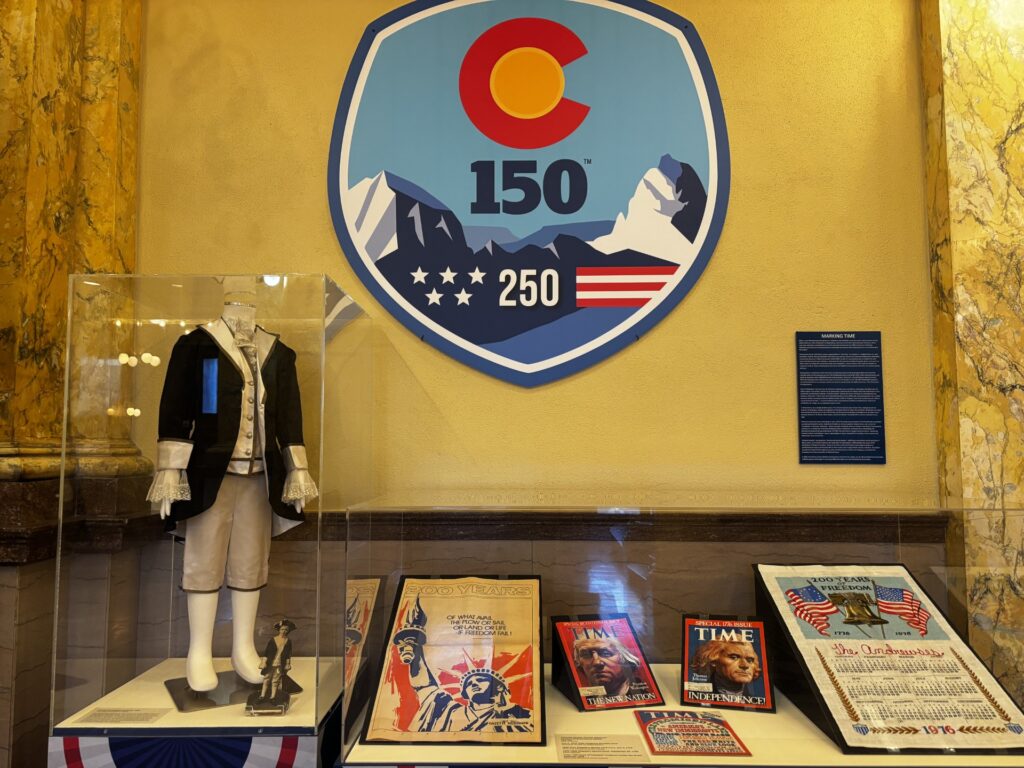
Marking Time – The Meaning of Centennial, America 250/Colorado 150 Exhibit
2026 is a year filled with historical significance. Institutions and individuals across the country will commemorate the 250th Anniversary of the Declaration of Independence, also known as the Semi-Quincentennial of America. At the same time, institutions and individuals across the state will commemorate the 150th anniversary of Colorado statehood, also known as the Sesquicentennial. But besides learning new and complicated words, why and how does this matter?
Anniversaries like the 250/150 are useful as opportunities to “mark time.” As residents of a neighborhood, city, state, and nation, what has the past looked like? And what do we want our future to be? Commemorating versus celebrating anniversaries allows us to reflect and examine. At the CSPM, our job is to ask questions and use evidence to share stories that illuminate the past and help us understand how the present was shaped by people, places, and events. In other words, how things look and function today was/is shaped by a series of choices and is neither inevitable nor created by accident. To get us thinking about how to use the 250/150 anniversaries to mark time, let’s start by looking at history.
During America’s Centennial in 1876, the nation was still recovering from the devastating effects of the Civil War a decade earlier. No less important was the 13th Amendment passed in December 1865, which abolished slavery and legally emancipated nearly 4,000,000 formerly enslaved people. At this time, what did being an American mean? What did citizenship entail? And was the country in a new era of freedom or not? The 1876 Philadelphia Exposition was the first World’s Fair on American soil and was timed to commemorate the 100th anniversary of the Declaration of Independence.
Held in Philadelphia’s Fairmont Park, the Centennial Exposition was an ambitious undertaking, attracting nearly 10 million visitors in six months. The fair was an opportunity to demonstrate the nation’s industrial achievements to the world while simultaneously working to “heal the wounds” between the North and South. By avoiding nearly any mentions of America’s “recent” past, the Centennial focused on a future filled with commercial promise and a unified American identity. According to historian Kimberly Orcutt, motifs of “progress” mixed with revolutionary-era rhetoric reassured Americans that, “…treasured national values remained intact and that a reunified nation could move confidently into a larger, more complicated modern world.”
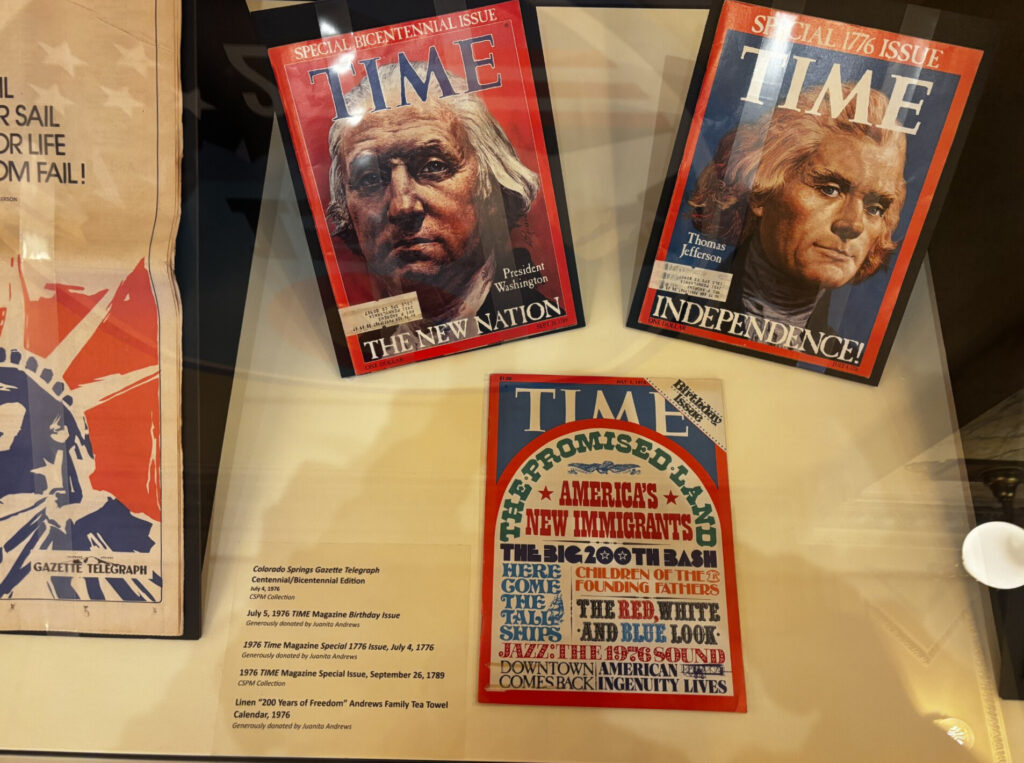
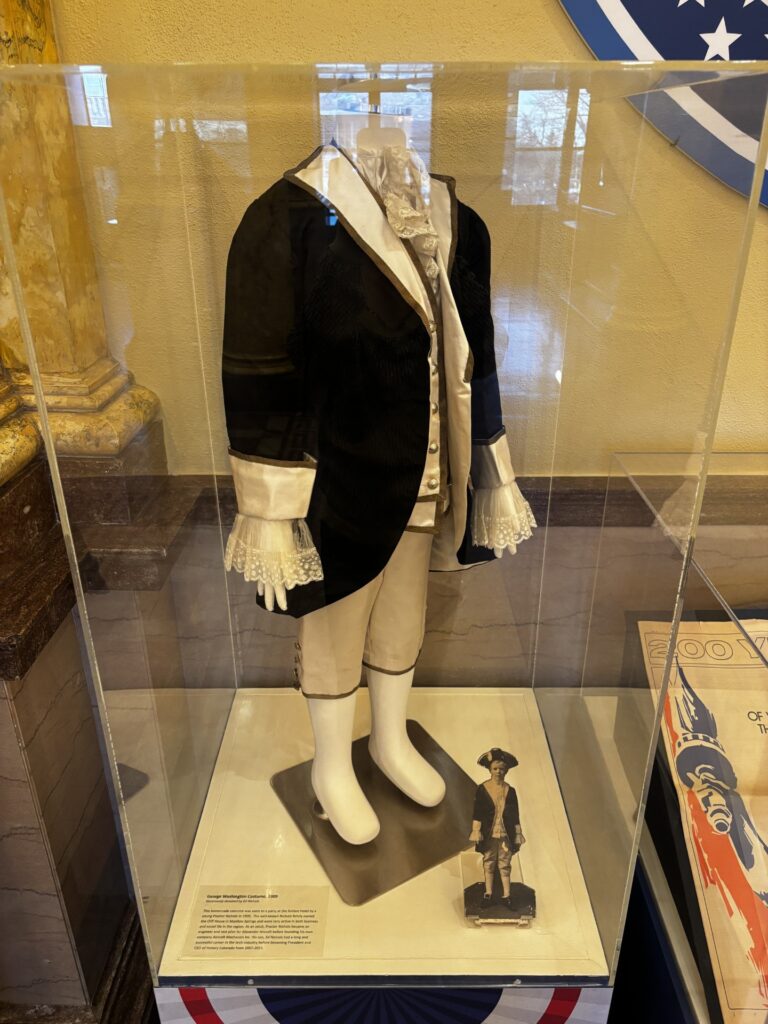
In 1976, America was a deeply divided country. The controversial and costly Vietnam War; widespread anti-war protests; the Watergate scandal, the resignation of President Richard M. Nixon; the Civil Rights Movement and violent state-sanctioned resistance to it; the 1973 oil crisis; and the brutal assassinations of Medgar Evers; President John F. Kennedy; Malcolm X; Dr. Martin Luther King Jr.; and Senator Robert F. Kennedy left the country exhausted and on edge.
Planned as a series of events culminating on July 4, 1976, the energy and excitement of the Bicentennial was palpable as people participated in picnics, dedications of public art, lectures, parades, firework shows, and a variety of “homegrown” community celebrations. Many remember visiting the American Freedom Train which crisscrossed the country on a 21-month tour of 48 states displaying artifacts, documents, and works of art. Interestingly, the Bicentennial along with the groundbreaking 1977 ABC mini-series Roots changed American Culture – deepening interest in history and leading to a boom in genealogical research, along with the founding of new museums and historic sites across the country.
President Gerald R. Ford signed the “Bicentennial Day Declaration,” reaffirming a commitment to the principles of liberty, justice, and freedom outlined in the Declaration of Independence. Reflecting later on the impact of the Bicentennial, President Ford stated, “Rarely in the history of the world had so many people turned out so spontaneously to express the love they felt for their country. Not a single incident marred our festival. The nation’s wounds had healed. We had regained our pride and rediscovered our faith, and in doing so, we had laid the foundation for a future that had to be filled with hope.”
In 2026, how will we use the 250/150 anniversaries to mark time? As a nation, are we still committed to the principles of liberty, justice, and freedom? Is our future filled with hope? Let’s start by having the conversation…