Colorado became a state on August 1, 1876, one hundred years after the Declaration of Independence. In terms of history – that is not a very long time. However, this place has been home to the Nuu-Ciu or Ute People since time immemorial, and 51 tribes have ongoing connections to the unceded land that makes up the State of Colorado.
Additionally, vast parts of the Southwest were claimed by Spain for hundreds of years – and by Mexico for over two decades – only becoming part of the United States through the Treaty of Guadalupe Hidalgo at the conclusion of the Mexican-American War in 1848.
The physical reminders of Spanish and Native American presence in the region are everywhere: Colorado is a Spanish word meaning “colored red”; El Paso is the name of our county and is Spanish for “the pass”; importantly, the pass referred to is Ute Pass, named for the eons-old route between the mountains and the plains west of present-day Colorado Springs.
There are also countless human reminders – someone born a citizen of Spain, became a Mexican citizen in 1821, and an American citizen in 1848 – all without leaving their birthplace. As the saying goes, “We didn’t cross the border, the border crossed us.”
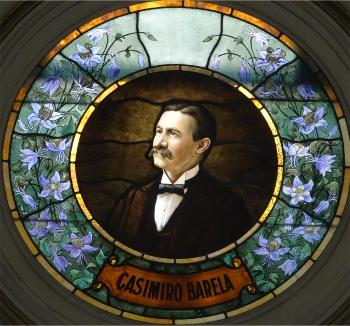
Casimiro Barela, nicknamed the “Perpetual Senator” or “Father of the Colorado Senate,” was born in Embudo, Mexico in 1847, one year before it became New Mexico Territory. The family moved north to Las Animas County, Colorado Territory in 1867. A successful rancher and freighter, Casimiro was appointed County Assessor three years later.
Selected as a Colorado Constitutional delegate in 1875, he successfully lobbied for the state Constitution and all Colorado laws (up until 1900) to be printed in English, Spanish, and German, a powerful recognition of the multicultural roots of the state.
Casimiro insisted that legislation be accessible to all Colorado citizens stating, “You may say that ignorance of the law does not excuse the breaking of it. I say it is the only excuse.” Barela served in Colorado senate for 40 years, holding numerous offices including President of the Senate, advocated for Columbus Day as a state holiday, and promoted equality under the law for all citizens as well as women’s suffrage.