2000 - 2020 Archives - CSPM

Lorem ipsum dolor sit amet, consectetur adipiscing elit. Ut elit tellus, luctus nec ullamcorper mattis, pulvinar dapibus leo.

2008 Economic Crisis

In 2008 the US suffered the worst financial crisis since the Great Depression of the 1930s. This severe worldwide financial crisis was caused by excessive risk taking by banks that caused the US housing bubble to burst and real estate to plummet. This sub-prime mortgage crisis damaged lenders and financial institutions globally, many of whom were on the verge of collapse if the federal government did not act to bail out the industry. This combination of banks unable to provide funds and American consumers borrowing and spending less caused the Great Recession, which began officially in December 2007 and lasted until June 2009, extending over 19 months. The financial collapse that began with the fall of the financial giant Lehman Brothers had global ramifications that are still being felt in Colorado today.

Colorado Springs in particular felt the impact of the Great Recession as 53% of the city’s funding is generated by sales tax revenue which plummeted as consumers chose to reduce their shopping needs in favor of paying off debt. Suffering from this steep decline in sales tax revenue, Colorado Springs had to take some drastic and unpopular measures. In 2010, the city cut more than 11% of its budget that included weekend bus service, regular maintenance of the city’s parks, and shutting off one-third of the city’s streetlights. The elimination of weekend bus services stranded many residents who depended on public transportation to run errands and get to work. Park restrooms were shut down and even the city’s police helicopter was sold. However, Colorado Springs residents stepped up and neighborhoods started collecting trash in parks when the city couldn’t afford it, and the city formed partnerships with local churches and non-profits to operate and fund community centers.

As Colorado Springs leaders discussed imposing even stricter budget cuts, the city’s economy begin to recover. Residents began spending again, and sales tax has steadily increased since November 2009. Weekend bus service has since been restored and the city’s streetlights are once again illuminated, but the Great Recession has had lasting impacts on the city. Mortgages are now harder to get, and more residents now rent than before the economic crisis. Although the city has recovered faster than other municipalities, Colorado Springs is still feeling the effects of the recession and continues to struggle to find ways to fund much-needed infrastructure projects, boost job growth, and restore citizen services.

Generously Submitted by Alex Archuleta, Historian

Manitou Incline

The Manitou Incline, visible from nearly any vantage point in the Colorado Springs area, is a 2,744-step hiking trail rising nearly 2,000 vertical feet in 0.9 miles with grades of 43% to 68%. The trail attracts local runners, Olympic athletes, and military personnel looking for an extreme challenge. Hailed as the “crown jewel of outdoor recreation in Manitou Springs,” the Incline has been one of the most popular tourist attractions in the region drawing hundreds of thousands each year.

Before the Incline became a popular hiking trail it first functioned as a 3-foot narrow gauge funicular railway built in 1907. The railway serviced a hydroelectric plant and gravity-fed waterline that provided water to both Manitou and Colorado Springs. After several years, the track was sold to Dr. Newton Brumbach who turned the Manitou and Pikes Peak Railway into a tourist attraction. Advertisements for the Incline boasted a 16-minute ride to the top that promised the visitor the opportunity to behold “scenic splendors” and claimed to be the “longest and highest incline on the globe.”

A rockslide in 1990 destroyed a large portion of the railway exposing rebar and mangling the track. The Incline was then closed and was not repaired. Shortly after several locals tried it as a hiking trail. Two-thirds of the way up is a false summit called “the Bailout” which connects to the popular Barr Trail. Even though the Incline quickly grew into a favorite trail, it was illegal for recreational use as it was private property. The Incline is owned by three separate entities: Colorado Springs Utilities, the Pikes Peak COG Railway, and the U.S. Forest Service.
The three entities along with the cities of Manitou Springs and Colorado Springs raised several safety and environmental concerns regarding the trail’s use. Erosion from human and natural forces raised concern about the trail’s stability and the U.S. Forest Service wanted the trail closed for revegetation. The impact on the local neighborhoods and parking disputes also heated the debate. A Site Development and Management Plan brought all the entities together with the local community to decide how best to manage the land and benefit hikers and Manitou Springs.

On February 1, 2013, the Incline became officially legal and open to the public after the Manitou Springs City Council voted 6-0 for the resolution allowing the trail’s recreational usage. In a dedication ceremony, city councilman Scott Hente broke a bottle of sparkling apple cider on the infamous “No Trespassing” sign to inaugurate the Incline. The sign served as a favorite photo spot for hikers and was donated to the Pioneers Museum.

One important event that takes place on the Incline is the annual September 11th climb done by local firefighters to honor their brethren who gave their lives on September 11, 2001. Organized by R.J. Gerry of the Cheyenne Mountain Air Force Station in 2015, the event has continued each year since. Firefighters, first responders, and Ft. Carson soldiers don 60 pounds of gear and hike the Incline to simulate the strenuous task of climbing the floors of the Twin Towers to save American citizens.

Incredible athletes have set numerous and astonishing records on the trail. The fastest male ascent which was verified by satellite belongs to Joseph Gray who ran the Incline in 17 minutes and 25 seconds on September 25, 2015. Olympic speedskater Apolo Anton Ohno was only 20 second behind Grey at 17 minutes and 45 seconds. The fastest female ascent at 20 minutes and 7 seconds was also set in 2015 by Allie McLaughlin. Most notably is the record held by Greg Cummings who ascended the Incline 1,825 times between January 12, 2019 and January 11, 2020. In total, Cummings climbed 3.6 million vertical feet, which is an astonishing accomplishment when compared to the 1.3 million vertical feet that the International Space Station hovers above the Earth. He could have run back and forth to the station almost three times!

Generously Submitted by by Heather Poll, M.A.

Venetucci Pumpkin Farm

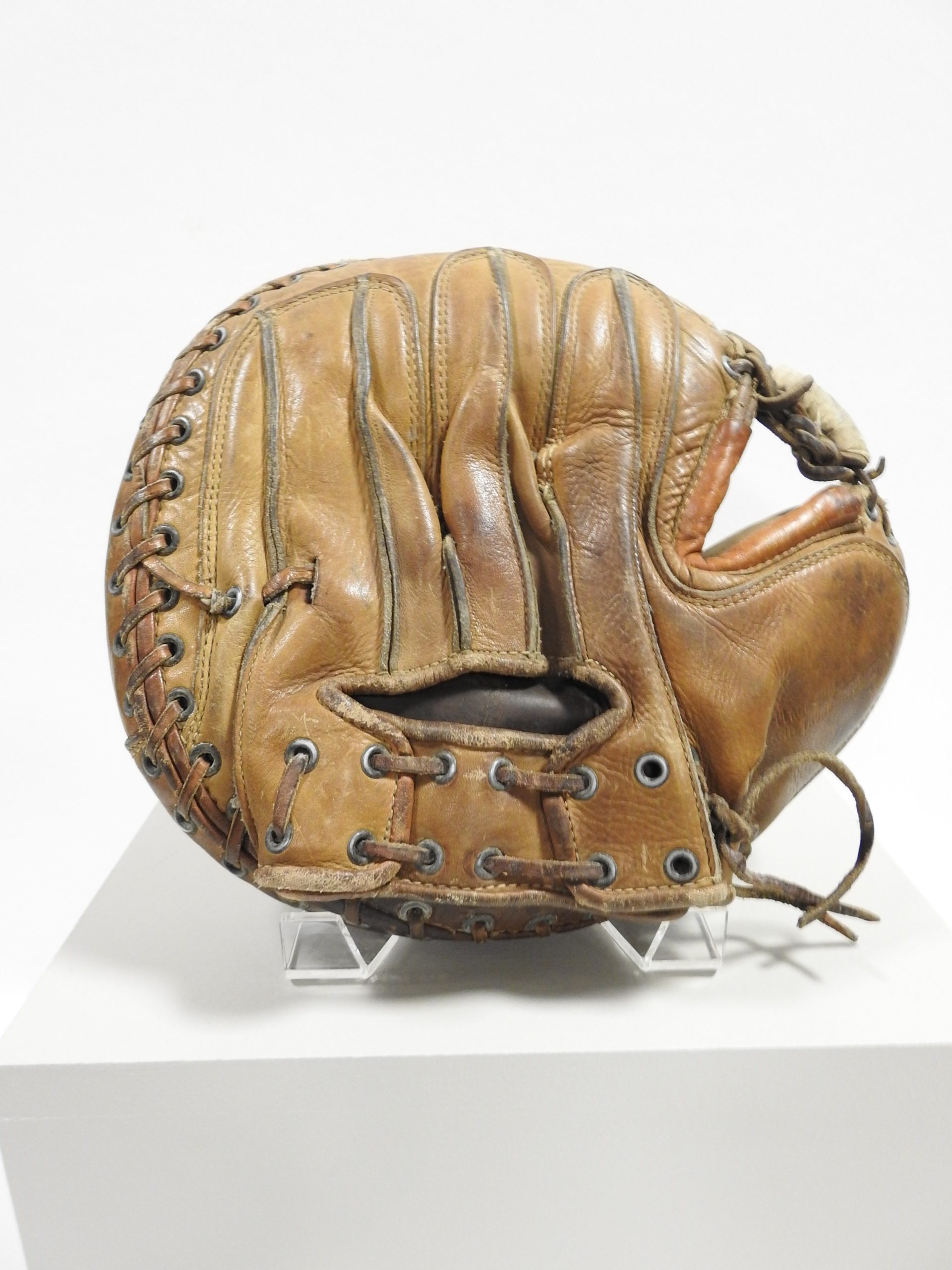
Born in 1911, Dominic “Nick” Venetucci grew up on a farm in Papeton. He was one of seven children of Italian immigrants Nicholas and Margarita Venetucci. As a young man, Nick excelled at baseball and played catcher on a New York Yankee’s Minor League Team in the early 1930s. He quickly advanced, moving from Class D to Class A in just one season. Due to the Great Depression, Nick abandoned his major league dreams to save the family farm. He then spent the rest of his life farming first with his brothers and later his wife.

Bambina “Bambi” Marcantonio Venetucci was born with severe visual impairments and in 1936 at seven years old, moved to Colorado Springs to attend the Colorado School for the Deaf and the Blind (CSDB). To further her dream to teach children like her, she enrolled at the University of Colorado Boulder where she was the first blind student, but transferred to complete her degree. In 1954, Bambi began teaching at CSDB where she flourished in the classroom. The state later honored her in 1983 as Teacher of the Year. She eventually wrote a book, Dammi la Mano: Give Me Your Hand, on her experiences.

Nick and Bambi Venetucci met in 1957 while attending St. Mary’s Cathedral. Bambi befriended Nick’s sister and Nick became interested when she called the family home. Captivated by her voice, Nick ignited a 27-year long courtship by leaving a basket of vegetables at her apartment. The couple finally married in 1984 after Bambi retired from teaching.

Nick Venetucci first gave free pumpkins to local children in the 1950s by parking his truck on Tejon Street. A teacher noticed and asked to bring students to the farm, beginning a tradition that lasted until 2002. Each year, the Venetuccis hosted 40,000 to 50,000 schoolchildren. Nick guided children around the farm, while Bambi scheduled and organized busses of students as well as other groups. The couple never had children of their own, but looked at local students who visited the farm as theirs.

The community in turn appreciated the Venetuccis. The couple received artwork from schoolchildren and community awards, including the Range Riders Silver Spur Award and the Governor’s School Volunteer of the Year. Nick considered the renaming of South Elementary School as Venetucci Elementary in 1986 the greatest honor of his life. When hail ruined the harvest in 1989, Pinello Elementary School gave the Venetuccis a 100-pound carved pumpkin. Later in 1995 when Nick broke his pelvis, Widefield High School Ecology students assisted with the harvest. After a drought ruined the crop in 2002, students at Pikes Peak Elementary School gave the Venetuccis hand drawn pumpkins. A final testament is the Pennies for Pumpkins drive by 15 area school districts to fund the Venetucci sculpture on the North side of the museum’s grounds.

Generously Submitted by Caitlin Sharpe, CSPM Registrar

Amendment 64

With the passage of Amendment 64 in 2012, Colorado, along with Washington, would become the first state to legalize marijuana for recreational use. However, within Colorado there are actually two laws that govern the use of marijuana: One for recreational use and one for medicinal use. In November 2000, 54% of Colorado voters approved Amendment 20, which modified the state constitution to allow the use of marijuana for “state approved patients with written medical consent.” When Colorado voters recognized the medicinal and economic benefits of decriminalization, this paved the way for a slew of state marijuana decriminalization laws in which Colorado has acted as a national model of interest.

Colorado first restricted marijuana use in 1917, however laws were not enforced until 1937 when the Marijuana Tax Act went into effect. Passed in 1937, the Marijuana Tax Act placed a heavy tax on the sale of marijuana (both industrial hemp and cannabis) in an effort to suppress the distribution of the substance. The Act was seen as heavy handed and was opposed by the American Medical Association (AMA) because a tax was placed on physicians prescribing marijuana and retail pharmacists who sold the popular drug for various medical ailments.

On October 1, 1937, the first day that the Marijuana Tax Act went into effect, Colorado saw its first marijuana related arrest. After police raided the Lexington Hotel in Denver they arrested a 58-year-old white farmer named Samuel Caldwell and a 26-year-old unemployed laborer named Moses Baca. The Federal Bureau of Narcotics and Denver City police had arrested Caldwell for dealing marijuana and Baca for possession. Colorado’s Samuel Caldwell would go into the history books as the first marijuana seller convicted under US federal law and was fined $1,000 along with a conviction of 4-years “hard labor” in Leavenworth Penitentiary.

Since the enactment of Amendment 64, Colorado adults aged 21 or older can cultivate up to 6 marijuana plants and legally possess up to one ounce while traveling. Medical patients prescribed marijuana by a physician cannot fill prescriptions at a pharmacy since marijuana is still classified federally as a schedule I drug. Patients must instead fill prescriptions from a recognized caregiver called a dispensary that offers consumers a range of marijuana options. According to state polls, Coloradans continue to support legalization of marijuana for recreational use and surveys have shown that from 2009 to 2015 the rates in which teenagers smoked marijuana has decreased in Colorado.

Generously Submitted by Alex Archuleta, Historian
Homelessness

In January 2020, the Pikes Peak Continuum of Care facilitated the Annual Point-in-Time count. The 2020 Point-in-Time count showed that there were at least 1,339 people experiencing homelessness in El Paso County on the night of January 26th, 2020. This number includes people in shelters, transitional housing, and those unsheltered. The total unsheltered count was 358. These numbers show a promising decrease of unsheltered from previous years. The Point-in-Time count, although considered a conservative estimate, contains useful data to help us understand long term trends of homelessness in our community.

Homelessness related issues are among the most frequent complaints that the City receives. Our community is concerned about the health and safety of those surviving outside as well as the substantial impact illegal camping has on the environment. Although not a service provider, the City of Colorado Springs remains committed to championing strategies that prevent and reduce homelessness in our community by assessing gaps across landscapes, planning, building awareness, convening stakeholder groups, identifying public-private partnerships, and leveraging resources. It is clear that the costs of homelessness are significant in human suffering, actual dollars, and public perceptions about the safety and vitality of the Pikes Peak region.

In 2019 the City of Colorado Springs sought community input in a series of six town hall meetings. From that came the 2019 Colorado Springs Homelessness Initiative. This Initiative set 10 short term attainable goals that aimed to improve homelessness related issues in the City of Colorado Springs.

The City launched a website (www.helpcos.org) to act as a clearinghouse of information for community members in need or for community members looking for a way to help. We also invested in adding additional shelter beds so that no one in our community is forced to sleep outside. We started the Pikes Peak Veteran Housing Fund and raised $100,000 to aid veterans experiencing homelessness to find a home of their own. We developed and launched the Colorado Springs Fire Department Homeless Outreach Program with targeted outreach in the Downtown area. We launched the Homeless Outreach Court Program in order to connect people to available resources through our Municipal Court system. We also launched WorkCOS, a City program that provides employment for individuals staying in our shelter system.

“I’m encouraged by the progress we have made this year on addressing homelessness in a meaningful and sustainable way,” said Andy Phelps, the City’s homelessness prevention and response coordinator. “Homelessness is an incredibly complex issue, but with sustained focus and truly committed partners like the Springs Rescue Mission, Salvation Army, the Place and the rest of the Continuum of Care, I am confident we will continue to move the needle on addressing homelessness in our community.”

We are proud to share that the City has met all 10 of the goals set forth in the 2019 Homelessness Initiative, improving homelessness related issues. More can be found on the City’s successes in responding to homelessness at: www.helpcos.org

Generously Submitted by Andy Phelps, City of Colorado Springs, Homelessness Prevention and Response Coordinator

Out Loud Men’s Chorus

In the 1990s Colorado Springs had a national reputation as being an anti-gay city, so much so that it was branded as “hate city”. In 1992 a Colorado Springs based group developed Amendment 2, which prevented homosexuals from having protected status. In 1996 the Supreme Court ruled that the law was unconstitutional. Colorado Springs also played host to Focus on the Family, a nationally known Christian organization that outspokenly opposed gay rights, which added to the perception of the city as being hostile to homosexuals.

However, during the aughts of the 2000’s the gay community became much more visible in Colorado Springs. The first Pikes Peak Lavender Film Festival, dedicated to gay and lesbian movies, debuted in 2000. In 2005 the Gay and Lesbian Fund for Colorado sponsored a Rainbow Prom. Then in 2006 Colorado Springs’ first gay men’s choir, Out Loud, made their debut.
Out Loud originated in October of 2005. Guy McPherson organized a group of nine gay, male parishioners from the First Congregational Church to put on a choral performance. The congregation was so supportive of the performance that McPherson decided to organize Out Loud Colorado Springs Men’s Chorus. They began rehearsing in January of 2006 and quickly grew from nine members to 21. In April of that year, they put on their first performance “A Night on Broadway” under the artistic direction of Charles Kurchinkski. The choir expected a few hundred people to show up on April 22, the night of the performance. However, an estimated 900 people showed up to hear, and support, the first gay men’s choir in the city.

Out Loud Colorado Springs Men’s Chorus has played an integral role in making Colorado Springs’ gay community more visible and accepted. They have also made it an active mission to inform the community about gay history and culture. In 2015, donning rainbow-colored ties and joined by the Denver Gay Men’s Chorus and the Colorado Springs Chamber Orchestra, Out Loud performed “Give ‘Em Hope! The Story of Harvey Milk” which told the story of America’s first openly gay elected politician. Then in 2019 Out Loud performed “50 Shades of Gay: A Commemoration of the 50th Anniversary of Stonewall” which discussed the events of the Stonewall raid in New York City. Out Loud has become a cultural fixture of Colorado Springs, showing just how far the city’s notion of acceptance has come.

Generously Submitted by Patrick Lee, CSPM Museum Technician

Waldo Canyon and Black Forest Fires

The Waldo Canyon Fire was one of the largest natural disasters in Colorado History. Whether in large or small ways, the fire affected us all and will continue to have a long-term, transformative effect on our community.

The Waldo Canyon Fire burned through the region’s hottest days in the summer of 2012. Before it was fully contained on July 10th the fire resulted in: over 32,000 evacuations, the loss of 18,247 acres, the destruction of 347 homes, damage to hundreds of others, an untold economic impact to local business and a devastating blow to our collective sense of safety and security. Most tragically, the fire also resulted in the deaths of two residents in the Mountain Shadows neighborhood.

In the aftermath of the fire our community responded in unprecedented ways. Donations of food, money and volunteers flooded to local support agencies and scores of residents waving flags and homemade thank-you signs lined city streets to honor first responders. As Mayor Steve Bach noted, “The values of our citizens were reflected in so many selfless acts of kindness, generosity and respect for those who lost so much.” This exhibit is dedicated to all those touched by the Waldo Canyon Fire. Our hope is that no matter how you experienced this disaster part of your story is reflected within.

As the anniversary of the Waldo Canyon Fire drew near, our community was faced with yet another natural disaster. The devastating Black Forest Fire of June 2013 destroyed over 500 homes, burned over 14,000 acres and tragically claimed two lives. While once again our firefighting resources have been tested – our commitment as a community to care for our neighbors is as strong as ever. Lessons learned during the Waldo Canyon Fire were immediately implemented to fight the Black Forest Fire and organize relief in its aftermath. We are grateful for the bravery and determination of our first responders and their heroic actions during both of these disasters.

Leah Davis Witherow, CSPM Curator of History

Corral Bluffs

Scientists from the Denver Museum of Nature and Science discovered an extraordinary collection of fossils in Corral Bluffs open space on the east side of Colorado Springs. The fossils provide striking detail about how the world and life recovered after the catastrophic asteroid impact that wiped out the dinosaurs 66 million years ago.

The scientists describe it as an unprecedented find. Thousands of exceptionally preserved animal and plant fossils from the first million years after the astroid struck.

“The course of life on Earth changed radically on a single day 66 million years ago,” said Dr. Tyler Lyson, curator at the Denver Museum of Nature and Science. “”Blasting our planet, an asteroid triggered the extinction of three of every four kinds of organisms. While it was a really bad time for life on Earth, some things survived, including some of our earliest, earliest ancestors.””
Inspired by a fossil that had been sitting in a Museum drawer and fossil hunting techniques used by some of his South African colleagues, Lyson stopped looking for glinting bits of bone in the Denver Basin and instead zeroed in on egg-shaped rocks called concretions.

Cracking open the concretions, Lyson and Miller found wonders. Inside were skulls of mammals from the early generations of survivors of the mass extinction. Finding even a single skull from this era is a coup. In fact, most of what is understood from this era is based on tiny fragments of fossils, such as pieces of mammal teeth. “You could go your entire career and not find a skull from this period. That’s how rare they are,” said Dr. Ian Miller, the Museum’s curator of paleobotany and director of earth and space sciences.

Yet he and Lyson found four in a single day and over a dozen in a week once the fossil-searching code was cracked. “It was crazy the way it happened,” he noted. So far, they’ve found fossils from at least 16 different species of mammal.

“Our understanding of the asteroid’s aftermath has been spotty,” Lyson explained. “These fossils tell us for the first time how exactly our planet recovered from this global cataclysm.”

The find is described in a paper published in Science magazine, and is told in a new documentary called “Rise of the Mammals” on PBS. The documentary is a NOVA production by HHMI Tangled Bank Studios for WGBH Boston. There is also an exhibit at the Denver Museum of Nature and Science.

Corral Bluffs is more than 700 acres of open space located near Highway 94 in Colorado Springs. Access to Corral Bluffs is limited to guided hikes. Visit www.corralbluffs.org for more information on these opportunities. Beyond this, the property is not open to the public.

COVID-19

As of January 30, 2021 our community, the United States, and the rest of the world are still dealing with the COVID-19 crisis. This is history that is being lived as of this moment – and it is story that cannot be told merely in numbers.

Recognizing that everyone has their own unique and important story, the Colorado Springs Pioneers Museum wants to hear from you. Please share your COVID-19 experiences with us through the Story of Us Y = You portal.

A portion of these submissions will be shared in a Story of Us digital exhibit, under C = COVID-19. However, all of the materials will be preserved as part of the CSPM permanent collection.

What has been your experience?

What do you want the community or future generations to know?

What objects, stories, photographs and/or videos do you have to share?

Art on the Streets

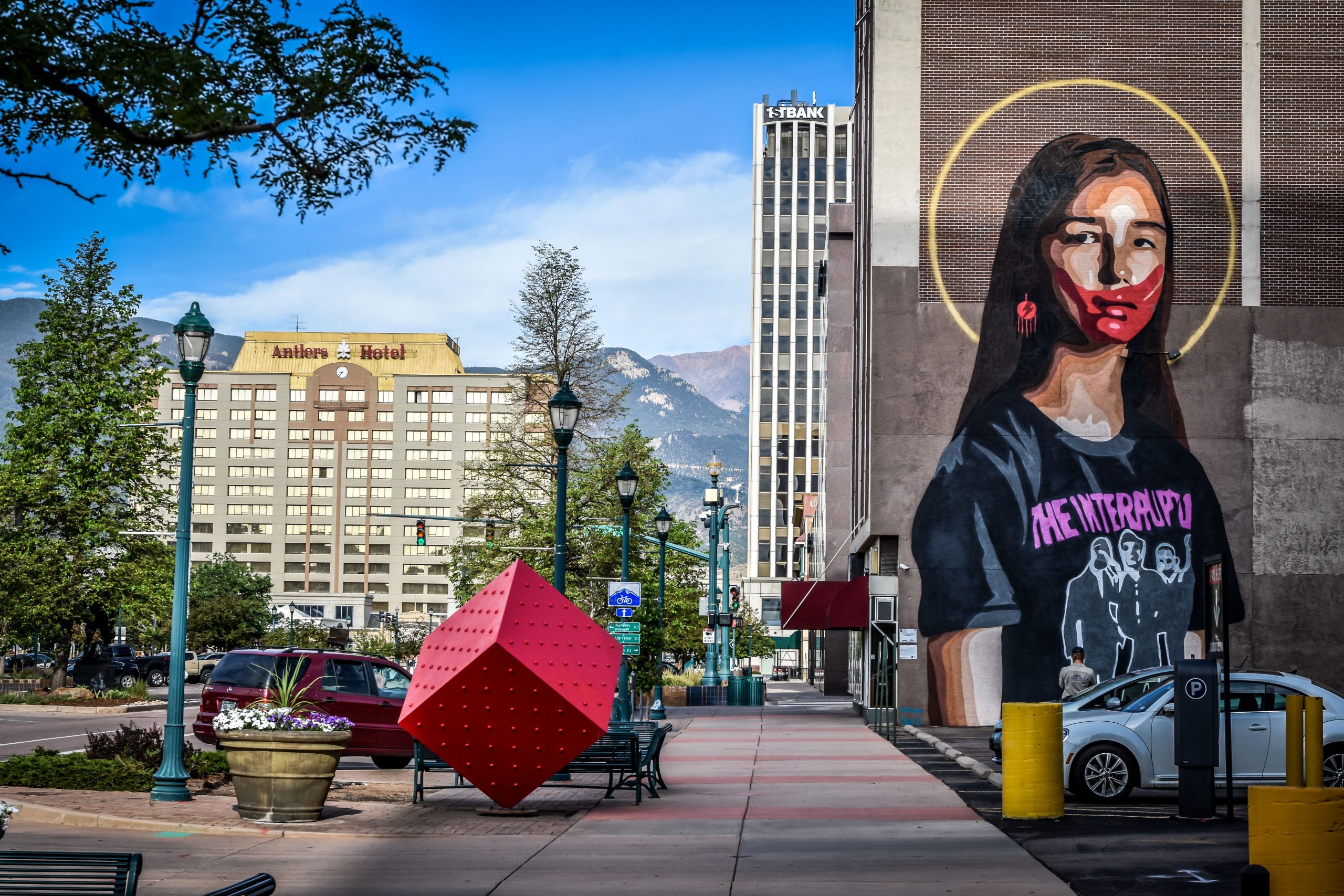
In the 1990s Colorado Springs was facing an urban growth crisis. The city’s geographic expansion was decentralizing the population, leading some to fear a future “Sprawlarodo Springs”, a city of subdivisions connected by nothing but strip malls. This brought about a fear in many that not only would the city’s population lose a sense of community, but also that the regions cultural heritage would soon be nonexistent. Judy Noyes, co-owner of the Chinook Bookshop, spearheaded a plan to address this issue. Noyes wanted to make the downtown area a cultural center, rather than just simply a retail district. The end result of this thinking would be Art on the Streets.

Planning began in 1997 and it would take 2 years for Art on the Streets to materialize. While residents were in favor of improvements, funding was a constant concern. Noyes, Chair of the Community Ventures Board of the Downtown Partnership, offered a solution. Artists would loan their work to the city for one year and have them displayed downtown. A single piece would be purchased and added to the City’s permanent collection of outdoor sculpture. This system was very appealing for three reasons. It allowed artists to get their name, and work, displayed to the public, it kept initial investments low, and it guaranteed a steady, if slow, increase in the number of city-owned public artworks. The first year of Art on the Streets, 1999, featured 20 separate sculptures displayed on downtown streets. The winner was Richard Jagoda’s bison, Bison Americanus which still sits in the median of Pikes Peak Avenue.

Art on the Streets has continued every year, consistently exposing Colorado Springs residents to new creative and thought-provoking artworks. Featured artists have come from all over the world, from Italy to South Korea, but also include local artists from all across the Front Range. Sculptures range from pieces inspired by Colorado Springs’ heritage to interpretive metal forms. Art is a central part of a city’s culture. Not only does it serve an aesthetic purpose, beautifying downtown, but it also has a social value. Pieces such as Nikki Pike’s WE or Gregg Deal’s Take Back The Power inspire conversations about topics relevant to the Colorado Springs citizens. Art on the Streets has ensured that downtown Colorado Springs has remained culturally relevant and engaged, now and in the future.

Generously Submitted by Patrick Lee, CSPM Museum Technician