1960 - 1969 Archives - CSPM

Lorem ipsum dolor sit amet, consectetur adipiscing elit. Ut elit tellus, luctus nec ullamcorper mattis, pulvinar dapibus leo.

The Colorado School for the Deaf and the Blind

The Colorado School for the Deaf and the Blind was founded by Jonathan R. Kennedy, who had three deaf children. Having worked in a school for the deaf in Olathe, Kansas, in 1873 he moved to Denver and quickly received the backing of Territorial Governor Samule Elbert and the territorial legislators to start a school for deaf children, located in Colorado Springs. General Palmer donated 10 acres of land east of downtown for the school’s campus. School was opened for the 7 deaf students in 1874 in temporary housing while the school buildings were built. In 1877, the school included blind students and in the 1890s, the school adopted its current name, Colorado School for the Deaf and the Blind.

Early buildings were a Collegiate Gothic style, much like college campuses at the time. The earliest buildings are gone, but the Administration Building, built in 1906. Still housed the major administrative offices.

Early student training along with the 3 Rs (reading, writing, and arithmetic) included specific trades, carpentry, farming, broom making, sewing, kitting, and printing. For over 50 years the school had a 200 acre dairy farm with students tending to pigs, chickens, and cows. Today students learn, along with regular school classes, basic work skills that can apply to a variety of jobs and professions. Approximately two-thirds of the students are deaf, and one third are blind. Fifty-percent of the student population is residential, meaning they live on the beautiful campus.

Emma Alice Kennedy, one of Jonathan & Mary Kennedy’s deaf daughters, and her husband, Frank Chaney, had a son, Lon Chaney. He became a famous actor in the silent film era, starring in “Oliver Twist,” The Hunchback of Notre Dame,” and “Phantom of the Opera.”

Sports and athletic skill development are an important part of the school curriculum. One graduate, Paul Hubbard, who played football at Gallaudet University, is credited with starting the football huddle so the other team couldn’t see their plans while using sign language. Wrestling at the CSDB has produced nearly 20 state champions.

George Veditz, chess champion and founder of the Colorado Association of the Deaf, worked with President Teddy Roosevelt to correct the Civil Service classifications of deaf people to enable them to become government employees.

Through lending their extensive special library materials, CSDB works with local and state public schools to give academic support to students who have some visual or hearing losses, but attend public schools. The CSDB is an exceptional school – for exceptional people.

Generously Submitted by John Orsborn, CSPM Volunteer Educator

Reverend Dr. Milton Proby

The first name that visitors to the Pikes Peak Region see as they depart the Colorado Springs Airport is Reverend Milton E. Proby; a man who advocated for equality, justice, and peace from the pulpit of St. John’s Baptist Church of Colorado Springs.

Born in DeKalb, Texas in 1929, Milton E. Proby grew up in the segregated Jim Crow South. After graduating High School, Proby joined the U.S. Army and served in the Korean War. These experiences led to a lifelong commitment to civil rights and humanitarian work.

Reverend Proby earned his BA in Theology, and began preaching before the age of 20. Along with Reverend Martin Luther King Jr., he was part of vanguard group of preachers who lead the movement to dismantle Jim Crow laws and challenge racial prejudice. Reflecting on this time, Proby noted that, “The only ones who could (move civil right forward) were the churches. We didn’t have lawyers and all those other things. It was all we had.”

In 1958, Proby arrived in Colorado Springs to become the Pastor of St. John’s Baptist Church. During his 47 years at St. John’s, he delivered holistic gospels, as exemplified by his words: “In the streets people are dying and going hungry, and you call yourselves the chosen of God? Quit coming to church to satisfy yourself. The reason for living is beyond yourself.” Under his leadership, health and welfare programs were established— including the St. John’s Food Bank— and a new church was built in 1976.

As a pillar of the Black community, Proby joined the 1963 Civil Rights March on Washington, and worked diligently to bring equality to Colorado Springs. In 1959, Proby started the Colorado Springs Human Relations Commission, which works closely with the City to address racial issues. In 1963 Proby became the first Chairman of the Colorado Civil Rights Commission; whose mission is to combat discrimination in Colorado through outreach, research, and legislative recommendations. He continued to serve on the Commission for over 25 years; striving to make change through dialogue, not confrontation.

In 1998 — sixteen years after Reverend Proby’s efforts to rename Fountain Boulevard in honor of Martin Luther King Jr. — a bypass of Highway 24 was dedicated to the Civil Rights leader. The renaming was not without controversy and highlighted the importance of Proby’s lifelong work. As Mayor Mary Lou Makepeace stated at the dedication: “Intolerance, ignorance and prejudice do exist in Colorado Springs. We must stand up and say ‘not here.’”

Reverend Milton E. Proby died on May 21, 2005 at 75. Nearly one year later, friends, relatives, supporters and City of Colorado Springs officials gathered to dedicate Milton E. Proby Parkway. His name, his legacy, and the results of his dedication to civil rights live on.

Generously Submitted by Hillary Mannion, CSPM Archivist

Homestake Reservoir

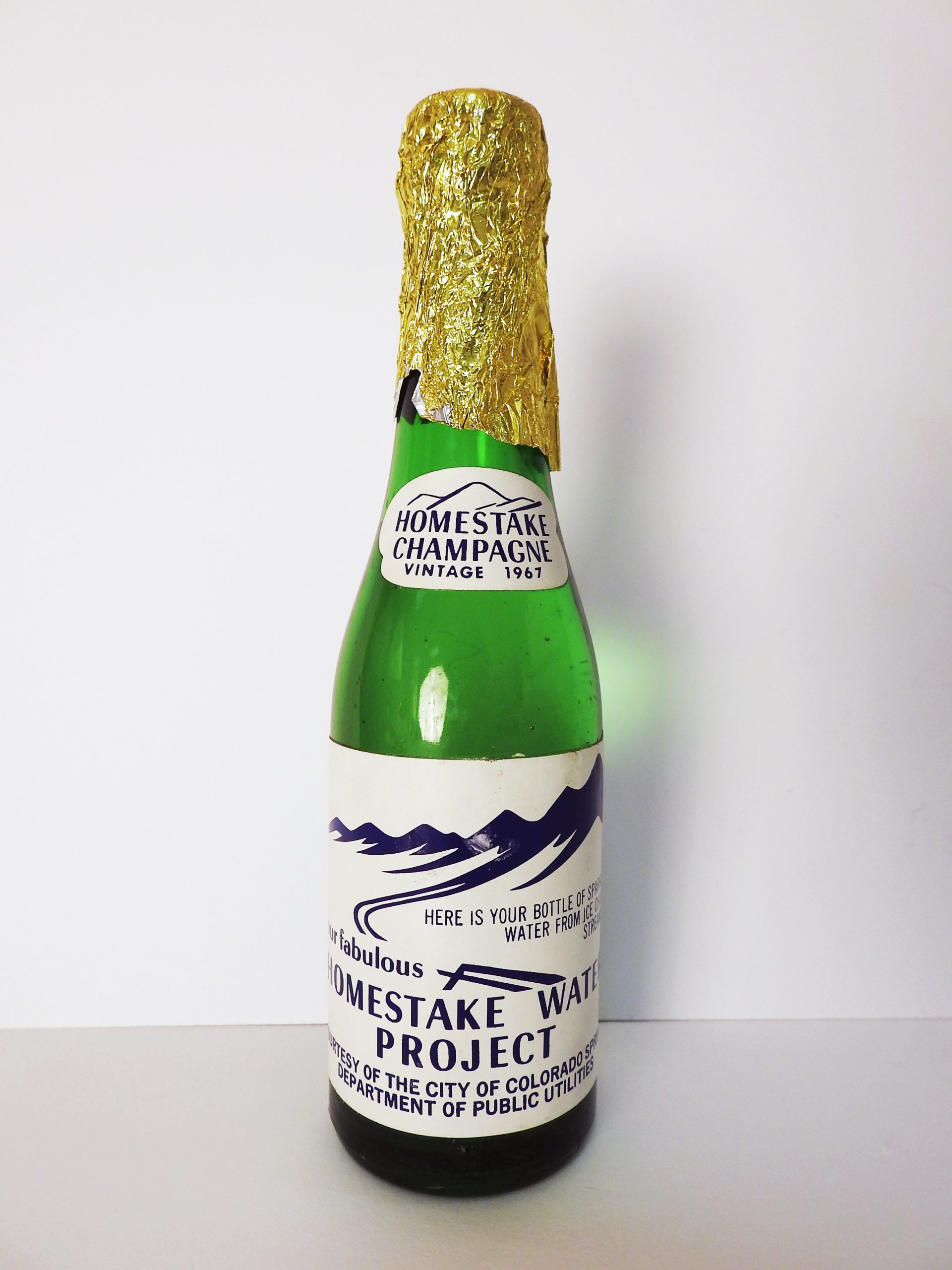
Post-World War II brought unprecedented growth to Colorado Springs. The city grew from about 45,500 people in 1950 to 135,500 by 1970, and local sources of water from Pikes Peak were not enough to sustain that number of people. The city’s first initiative to transfer water from the Western Slope was completed in the 1950s when it tapped the Blue River near Breckenridge and sent water through pipelines under Hoosier Pass. But that was not enough, so by 1963 it began a larger project to bring water from Eagle County, under the continental divide and into Turquoise Lake near Leadville, down the Arkansas River Valley, and then through the Otero Pump Station just north of Buena Vista to be sent to reservoirs on Pikes Peak for storage. The Homestake Project was a massive undertaking in partnership with the city of Aurora that increased the city’s water supply by over 50%, and a second phase was planned to provide even more. However, by the 1970s cities could not take water as cavalierly as before, namely because the 1969 National Environmental Policy Act required an environmental impact statement, and because of a new Colorado law strengthened counties’ jurisdiction over land uses. The Homestake II plan would tap water in the Holy Cross Wilderness, an affront to the supposed protection of wilderness lands. Ultimately Homestake II was denied in 1988, forcing the city to again look for new sources of water. Colorado Springs next bought water rights from Arkansas Valley farmers stored in Twin Lakes in Lake County, then partnered with the federal government to divert more Western Slope water from the Frying Pan and Roaring Fork Rivers to further provide for its needs. the Southern Delivery System (SDS) was the latest of the city’s big water projects. This project pumps water upstream from the Pueblo Reservoir, a facility built with federal money as part of the Frying Pan-Arkansas water project in 1975. Phase I of the SDS was completed in 2016. The project uses 11 pumps in three pumping stations to send water through a 66” pipeline from the Pueblo Reservoir 50 miles and 1,500 feet uphill to new storage reservoirs, all to provide water for people who do not yet live here. The project ultimately will cost billions and provide water for over 200,000 new households beyond the 2010 Metropolitan Area population of over 645,000.

Generously Submitted by Dr. John Harner, Professor of Geography & Environmental Studies, University of Colorado, Colorado Springs

UCCS

In 1952, the University of Colorado established an extension center in Colorado Springs, administered from its campus in Boulder. Classes were held in Palmer High School and at Colorado College. By 1962 David Packard, a Pueblo native and co-founder of the technology firm Hewlett-Packard, was looking for a new site for an oscilloscope research and manufacturing plant. He liked the Colorado Springs location; it fit most of his criteria except for the lack of a nearby university with an engineering program. Given his industrial clout and local familiarity, he met Governor Stephen McNichols about the need for a local university. Governor McNichols offered to establish a branch of the University of Colorado, and in June of 1964, the University of Colorado Regents officially established The Colorado Springs Center of the University of Colorado. Governor John Love, a Colorado Springs native, then worked with George Dwire, the Managing Director of the Cragmor tuberculosis sanatorium that had closed in 1962 about the possibility of converting the site on Austin Bluffs into the new campus. Negotiations were successful for 82.5 acres with all structures and equipment, for which the University of Colorado gained title in 1965 when it paid one dollar. The property consisted of the four-story sanatorium, a three-story nursing home, a two-story dormitory, and several cottages and workshops, all in poor condition. When classes started in the fall of 1965, there were still hospital beds and equipment on floors of the main building, and the center had to borrow desks from School District Eleven. The Geography lab occupied the old morgue, with medical equipment and supplies in the storage room adjacent. In addition to these challenges, the Colorado Commission on Higher Education (CCHE) resisted the creation of a new campus. The CCHE saw no need for another four-year university, believing that CU Boulder and Colorado State were sufficient. Local leaders advocated strongly for the new campus, so that in 1971 the CCHE finally passed a resolution in support. A 1972 ballot initiative amended the state constitution to recognize that the University of Colorado at Colorado Springs and Denver are parts of the University of Colorado. In 1974 the Cragmor campus officially adopted the title University of Colorado, Colorado Springs (UCCS). The university has grown to become a comprehensive baccalaureate and specialized graduate research university with over 12,000 students on 535 acres, offering 50 undergraduate, 24 masters, and seven doctoral degrees.

Generously Submitted by Dr. John Harner, Professor of Geography & Environmental Studies, University of Colorado, Colorado Springs

Papeton

The northern city limits of Colorado Springs were originally near Fontanero Street, extending north to just above today’s Penrose Hospital by 1890. Although well outside of city limits, settlements started to fill in northward towards Austin Bluffs. The Chicago, Rock Island, and Pacific Railroad completed a line from the east in 1888 that ran along today’s Constitution Avenue and connected with Denver & Rio Grande (D&RG) lines just north of the city limits. A new town, Roswell, was built for railroad workers near their 16-stall roundhouse and repair yard. Advertisements in the January 1, 1889 Gazette promoted the new town as “A Second Colorado City,” and, like Colorado City, was conveniently located outside of the city limits of Colorado Springs until annexed in 1950. Roswell became well known for its racetrack and later drinking establishments on the Nevada Avenue highway to Denver. Today Roswell remains a pleasant neighborhood close to downtown and the four remaining stalls of the original roundhouse are home to the Pikes Peak Trolley Museum. Along the south slopes of Popes and Austin Bluffs runs an exposed coal seam where up to 98 coal mines were excavated. One of these was the Pikeview mine, the largest in the region, which started production in 1897 and opened as a stop on the D&RG rail line. This mine and rail stop became a sizeable community. Closed in 1957, few would know this thriving center existed in the site now occupied by stores and Interstate 25. One of the largest mines on Austin Bluffs was the Curtis mine, opened in 1899. During the region-wide 1903 labor unrest workers left the shacks immediately adjacent to the mine and moved ½ mile south to establish the new community of Papeton, named after union leader John Pape. Centered on Hancock Street just south of today’s Templeton Gap causeway, this was known as an Italian mining community, which also gained a reputation for producing bootleg spirits during prohibition to serve wealthy TB patients at the Cragmor Sanatorium, built in 1905 and now the site of UCCS. From the Cragmor district, several large operations extended east to today’s Palmer Park and beyond to the Rustic Hills neighborhood. Rail spurs connected these mining communities. Suburban homes filled in around them by the 1960s, so that today Austin Bluffs is near the center of the city rather than its far northern outpost.

Generously Submitted by Dr. John Harner, Professor of Geography & Environmental Studies, University of Colorado, Colorado Springs

“Mama” Susie Perkins

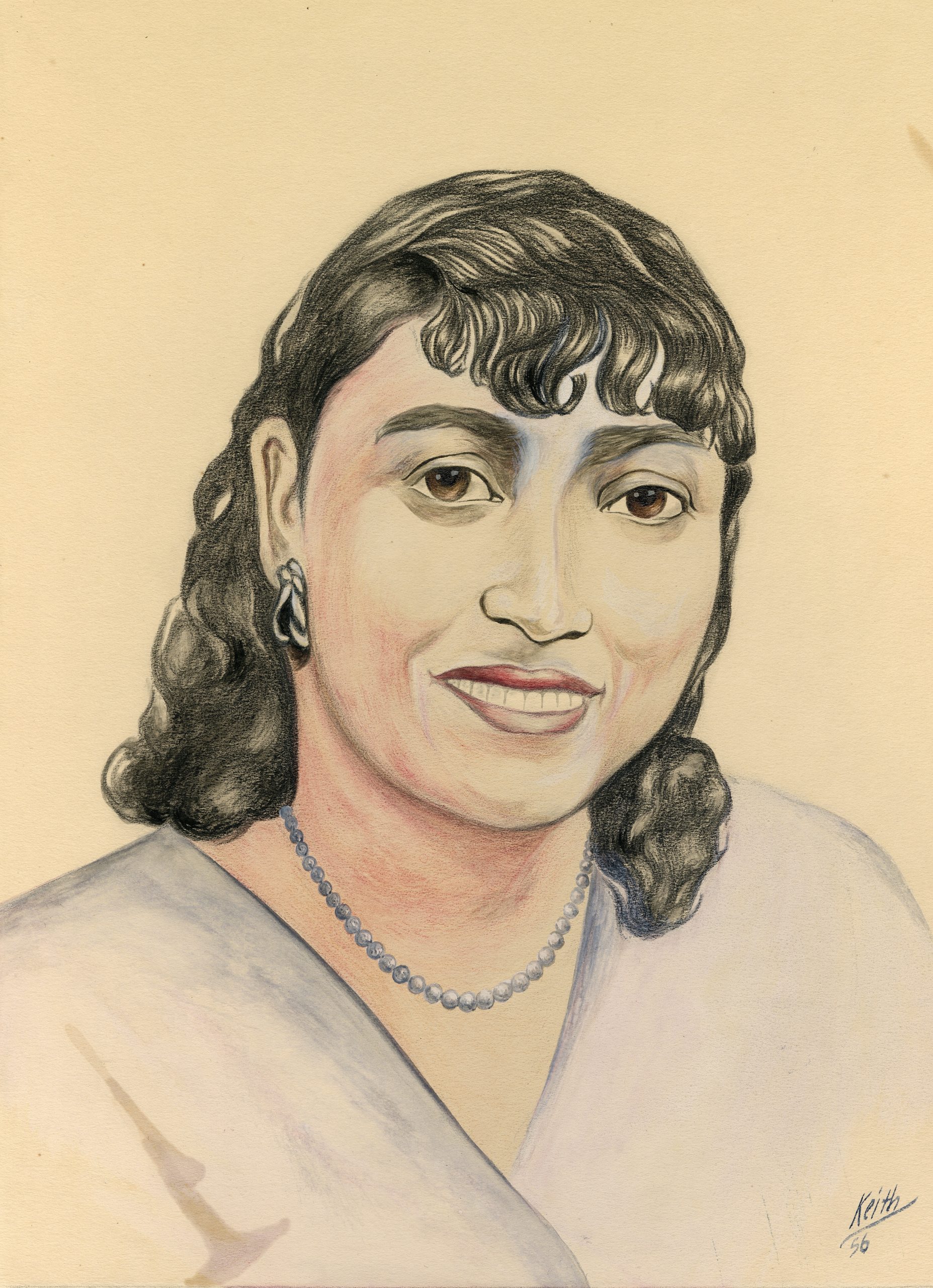
From farm girl to teenage mother to prominent business woman, “”Mama Susie”” Perkins was an entrepreneur, philanthropist, and visionary who provided jobs and homes to thousands of people and became known as one of the wealthiest Black woman in Colorado Springs.

Mama Susie was born September 27, 1902 to Tom and Lila Brown Harrison in Winona, Mississippi and gave birth to her only son, Thomas Alpha Wright, when she was 14 years old. She passed away December 3, 2000 at 98 years of age and was preceded in death by her husband William Harvey Perkins and her brother, Alfie “”Round Boy”” Harrison.

As a girl, Mama Susie saw her grandparents evicted from their farm by the owner and declared, “”I promised God that if I ever got grown and had children, I’d own my own home and nobody but God would take it away from me.”” Her mother, Lila, suffered from asthma and heart trouble for most of her life and was told by a doctor she wouldn’t have long to live. They moved to Colorado Springs in 1937 where Lila’s health improved, and she actively lived for 30 more years.

While in Colorado Springs, Mama Susie made her own distinctive mark on the civic and business world for more than half a century. She purchased her first truck and grew and operated her own trash hauling business for 12 years when few Black people – let alone women – owned businesses. By the time she sold her trash hauling business, she had 7 trucks and 7 crews.

Mama Susie married William “”Daddy Bill”” Perkins on June 7, 1947 and for a short time they owned “”Bill and Susie’s Cafe”” on Colorado Avenue.

Mama Susie used her businesses’ earnings to buy 100 rental properties over the years in downtown Colorado Springs and renovated them with the help of her husband and family. She was also unique for renting to those no one else would, including military, underprivileged families, and people of color.

Mama Susie was a great supporter of St. John Baptist Church and gave liberally to the poor and needy. She was a charter member of the NHACS and was named “”Woman of the Year”” by the Western States Baptist Convention in 1973. She also received special recognition for her help and service with the Washington School’s lunch program and was recognized by Thomas B. Doherty, Superintendent of Schools in District 11, for her “”thoughtfulness in helping our schools and our pupils.””

Mama Susie touched many lives with her dedicated work in our state and local communities.

Generously Submitted by Brianne Smith, Great-Granddaughter.

Pikes Peak Community College

Pikes Peak Community College developed in an American history context. After World War II —with G.I. Bill support — community colleges proliferated. In the 1960s, Baby Boomers added demand. A 1961 Colorado committee proposed four new “junior” colleges. They included Colorado Springs, anticipating growth, largely military. By 1968, El Paso Community College opened.

In the 1970s-80s, high-tech and medical industries, and returning Vietnam veterans, pointed to vocational education, which was 70 percent of EPCC’s enrollment. EPCC became a Servicemen’s Opportunity College. Ft. Carson “sold” EPCC land for a new campus for $1, to support military access. The architect was Clifford Nakata, a Japanese American who had suffered WWII “relocation” with his family. They named the new campus Centennial, dedicated on August 18, 1976, because of the U.S. Bicentennial/Colorado Centennial year. The college also proposed a new name, becoming Pikes Peak Community College on March 21, 1978.

Growth in the 1980s-90s led PPCC to develop other campuses. In 1986, the Downtown Studio Campus opened at 19 North Tejon St. It moved in 1993 to the former St. Mary’s High School.

In 2016, PPCC received $1 million, from the Marie Walsh Sharpe Foundation, to develop a Creative Commons downtown. Now DTSC is also expanding into the nearby Gowdy Building. Again, in 1986, PPCC used Rampart High School as a north campus. It finally acquired land, completing Rampart Range Campus in 1998. In 2008, PPCC hosted The Classical Academy on its acreage, leading in concurrent enrollment of high school students.

In the later 1980s, diversity and equity priorities increased. In 1989, Marijane Paulsen became the first woman president of PPCC. Joseph A. Garcia became PPCC’s first president of color in 2001. In 2016, PPCC hired its first executive director of Diversity, Equity, and Inclusion and began anew to address underrepresented minorities.

Still changing with the times, in 2019, PPCC ventured into Cybersecurity as a major program. In 2018-19, PPCC successfully proposed its first two bachelor’s degrees, hearkening back to vocational/medical roots: a Bachelor of Applied Science in Emergency Services Administration and a Bachelor of Science in Nursing.

With over 18,500 enrollments in 2018-19, PPCC has come a long way. Its first 50 years validate goals ascribed to community colleges historically: community colleges would be affordable and adaptable to society’s needs. They would make higher education available to a majority of the population. Community colleges would be one of the best investments in America’s future.

Generously Submitted by Katherine Scott Sturdevant , Professor of History, Pikes Peak Community College

Hewlett Packard

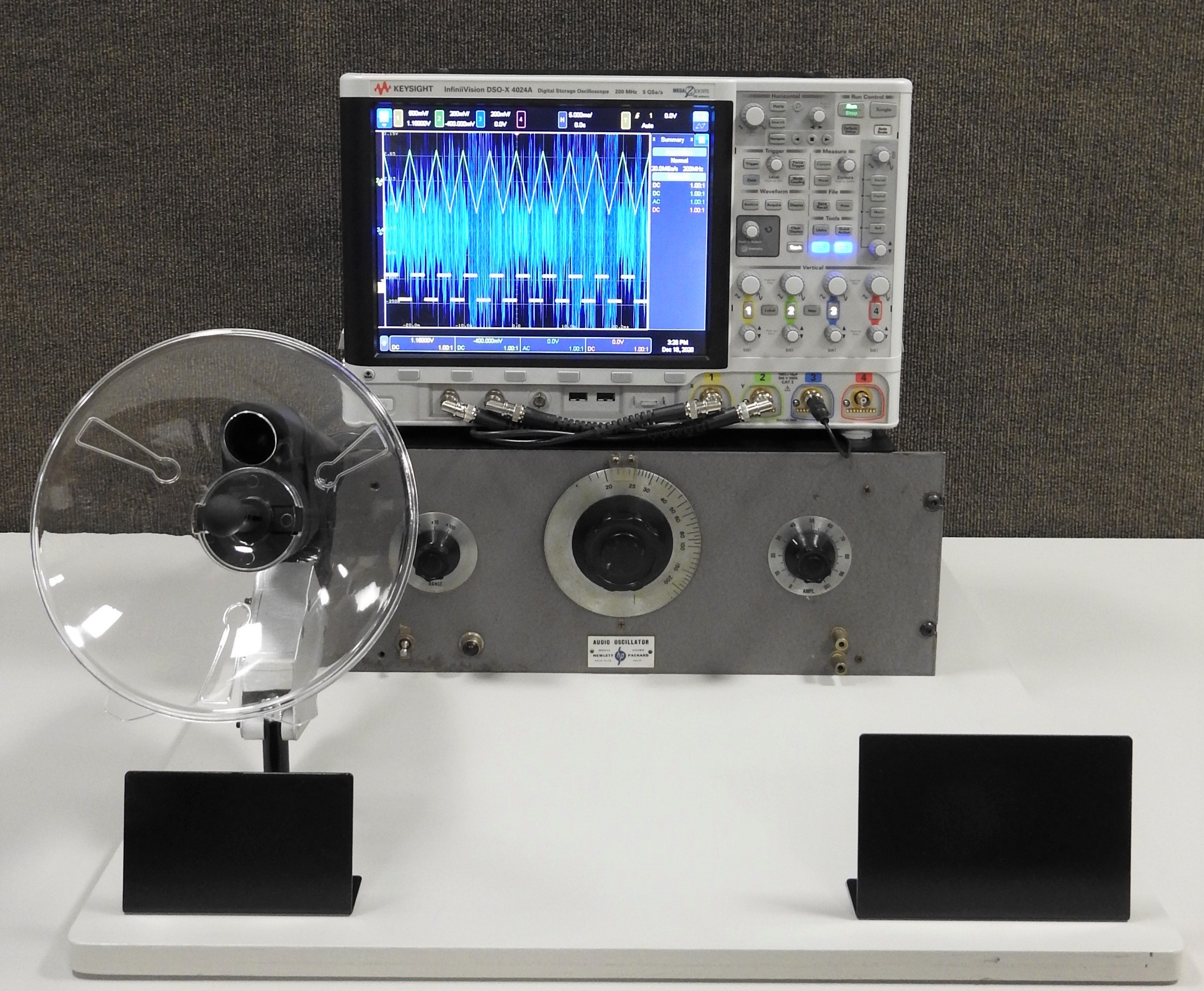
In 1962 David Packard decided to transfer his oscilloscopes business from Palo Alto, California to Colorado Springs where he felt he could build a strong team and compete in the highly competitive field of electronic test and measurement. The challenge was to invent scientific measurement technologies that would enable the booming electronics industry in the 1960s.

Dave was a native of Pueblo and he wanted to support his home state, but before selecting a site for a factory he needed to ensure there was a nearby university to provide talent in the areas of engineering and business management. Colorado’s governor and the head of the University of Colorado were fully supportive – and this was the beginning of UCCS.

H-P launched the construction of the factory in 1963 at 1900 Garden of the Gods Road – just down the hill from the planned university. By 1964, the HP team in Colorado Springs began inventing solid-state oscilloscopes, cathode ray tubes, digital logic analyzers, telecommunication analyzers and other electronic test equipment.

The original team was led by Cort Van Rensselear, followed by Stan Selby, and Bill Terry. In recent years HP has formed independent companies to carry the business forward – including Agilent Technologies and Keysight Technologies and both companies presently occupy the original site.

The HP/Agilent/Keysight engineering culture is best defined by a concept Packard called “The HP Way” which was based on the personal values of the founders Hewlett and Packard. Codified in 1957, The HP Way was transformative across HP and the entire high-tech industry. Bill Hewlett described it in 1982 as “… the policies and actions that flow from the belief that men and women want to do a good job, a creative job, and if they are provided the proper environment, they will do so.” The HP Way included objectives pertaining to profit, customers, employees, management, and citizenship. It was a revolutionary recipe for managing a high-tech company that encouraged management to walk around the plant, listening and seeking ideas, uncovering problems and driving continual improvement.

HP, Agilent and Keysight continue to thrive and grow in Colorado Springs today and The HP Way remains an important foundation. The workforce numbers over 700 people and the companies remain closely connected with UCCS and are among the city’s most active philanthropic contributors.

Generously Submitted by Alan Steiner, Retired HP Executive

Looart Press & Current

Making a business succeed in a basement is difficult enough but turning it into a company that sells for over $100 million is nearly impossible. However, Orin and Miriam Loo, of LooArt and Current, did just that. The Loos first visited Colorado Springs in 1940 and fell in love with its’ beautiful scenery and welcoming climate. 6 years later when Orin was offered a new job the family moved from Kansas, Orin leaving his job as head of the lithography department at Hallmark Cards.

In 1947 Orin started his own company, Looart. Orin set up shop in the garage and put together an album of personalized Christmas cards. For the next 3 years LooArt continued to find success by creating a more extensive album of Christmas cards and also through commercial work such as printing the menus for the Broadmoor Hotel. In 1950 Miriam had an idea for how to sell a new product Orin had developed called “Post-A-Note”. She started Current and purchased a church directory. She sent out 500 boxes to ministers with flyers advertising Post-A-Notes as a fundraising item.

Miriam directly advertised to people, which meant she would know exactly what kind of business she received due to her mailers. The company required a minimum order of 6 boxes while also offering to pay for postage when people prepaid for their order. Miriam utilized direct advertising, encouraged bulk purchasing, and offered a cost-effective product, all of which are practices that Current has retained to this day. Current operated out of the basement for 10 years. LooArt and Orin would produce designs and new products, such as recipe cards, and print everything. Then Miriam, and Current, would sell them. In the 1960s Orin and Miriam’s sons, Dusty and Gary, went to work for Current and LooArt, respectively.

In 1967 LooArt merged with Current, combining the manufacturing and marketing abilities of both into one business. The business would continue to grow from there, continually expanding its product line and variety of designs. They found success selling bank checks and a line of cookbooks that Miriam helped developed, originally with her own recipes and eventually by a team of cooks in a test kitchen. In 1987 Dusty and Gary, then in control of the company, decided to sell Current to the American Can Company for $115 million. The Loo’s faith in their businesses truly paid off.

Generously Submitted by Patrick Lee, CSPM Museum Technician

Urban Renewal

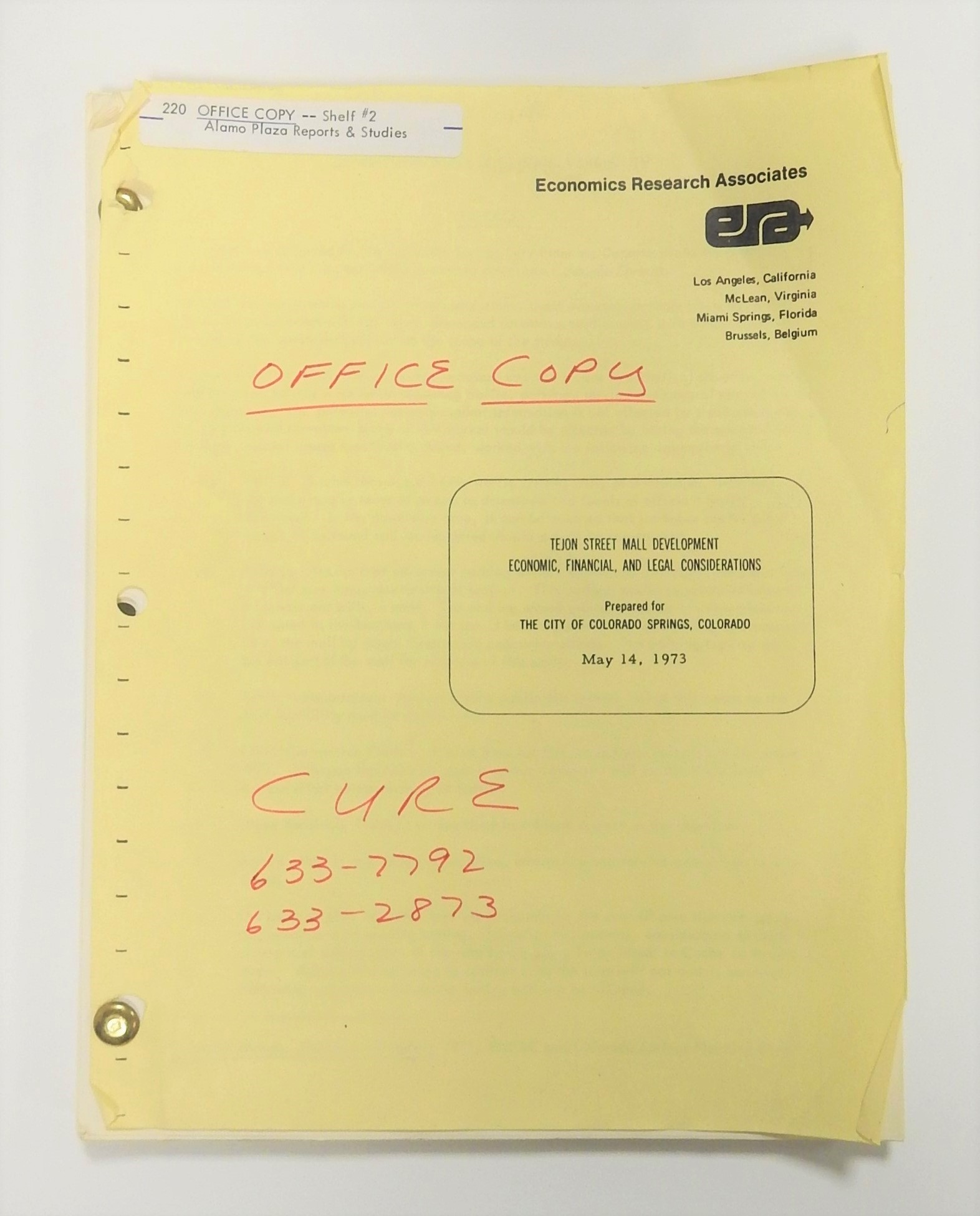
In the 1970s the national craze for urban renewal swept city planners. Urban renewal authority planners targeted the “blighted” sections of the city south of Colorado Avenue for renewal. As happened throughout much of urban America in the 1960s and 1970s, the zeal for renewal meant wholesale destruction of the dense urban fabric that grew organically over decades to be replaced with large scale, institutional structures occupying entire city blocks. And by no coincidence, the landscapes deemed “blighted” were usually minority neighborhoods with low-income housing and a plethora of shops and businesses to serve that community. Colorado Springs was no exception, and the blocks from Sierra Madre Street to Weber Street south of Colorado Avenue, the areas of historically African American concentrations, were bulldozed. In the heart of this zone was the Cotton Club, razed in 1975. Today the city’s legacy to urban renewal are numerous large office buildings, the Pikes Peak Center, the Sun Plaza, the County Courthouse and Jail, and County Office buildings— institutional structures that, in the spirit of modernism, create a clear break from the past and embrace supposed rational progress. The scale and use of these buildings present an imposing, sterile face to the pedestrian. Today’s vibrant pedestrian zone hits an abrupt halt as one walks south on Tejon Street and reaches Colorado Avenue and the urban renewal projects, until shops again pick up three or four blocks south. The Cotton Club and the many other shops in the small-scale buildings that foster human interaction were sacrificed in the name of modernity and a bright vision for a clean urban future. The urban fabric now is interrupted by an abundance of surface parking lots where once stood shops, club, houses, and businesses—the stuff that encourages human mingling and makes a commercial zone function. Much of the early African American neighborhoods are gone, particularly the largest in what was then the southeast of the city. Urban renewal again took some of those as the Lowell neighborhood developed after South Junior High closed in 1983. The neighborhoods around the AT&SF depot were particularly hard hit as clearance slowly removed nearby houses. Housing that remains in the neighborhood along south Cascade Avenue towards Mill Street gives a clue to the character of the old blue-collar districts of the city, even as individual houses continue to be torn down in the downtown.

Generously Submitted by Dr. John Harner, Professor of Geography & Environmental Studies, University of Colorado, Colorado Springs